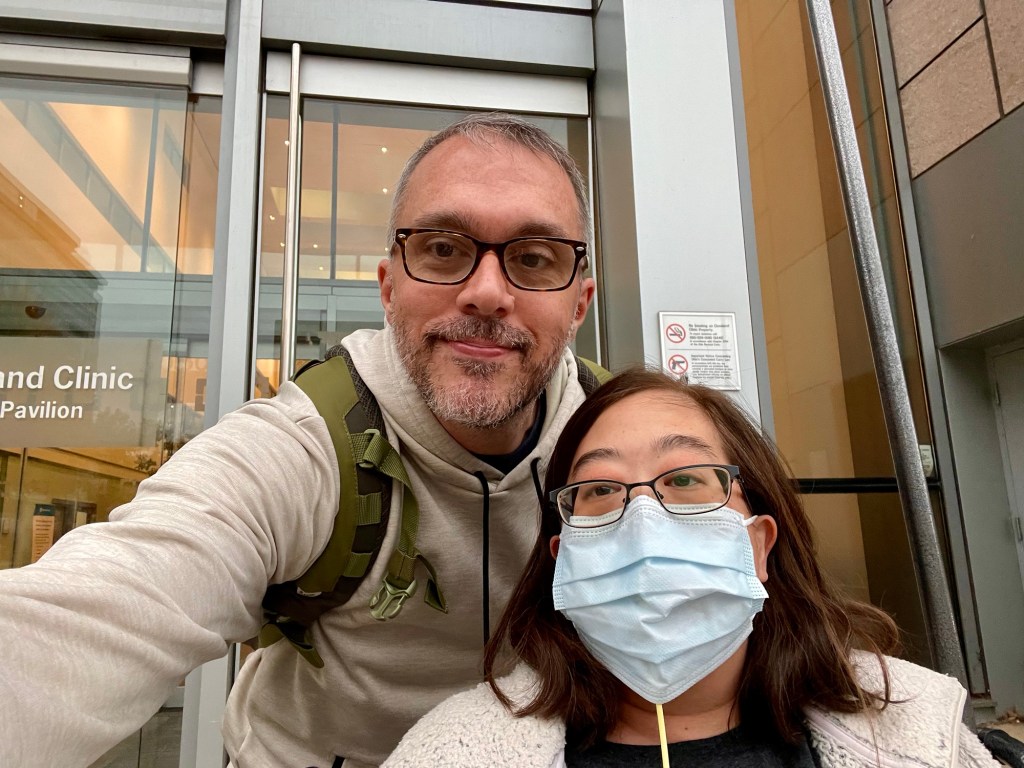
Tasha and I returned to Cleveland Clinic on October 30 for her routine labs, X-rays, spirometry, clinical, doctor checkups, and a stomach procedure.
Since the feeding tube became dislodged, nutritional goals have been challenging, and Tasha has lost another eight pounds in the two weeks since. Her laboratory results showed dangerously low sodium, magnesium, and potassium levels. I will return to that later.
As far as her transplant-specific results go, everything is wonderful. Once again, her spirometry testing results showed another 4% increase in breathing capacity. The X-rays showed that the lung bleed has continuing to heal and disappear. Everything looks great!
Tasha’s six-month bronchoscopy is scheduled for early December.
Now, back to the labs. Tasha and I spent 7 hours in the Cleveland Clinic Emergency Room last night, having IV sodium, magnesium, and potassium pushed to get her levels up to safe levels for general anesthesia for her EGD procedure. This was quite the event for many reasons, as CC ER is as exciting and sickly place as you might imagine. After two rounds of IVs, we got out of there around 10:30 pm and, thankfully, were able to have a police officer drive us back to our hotel.
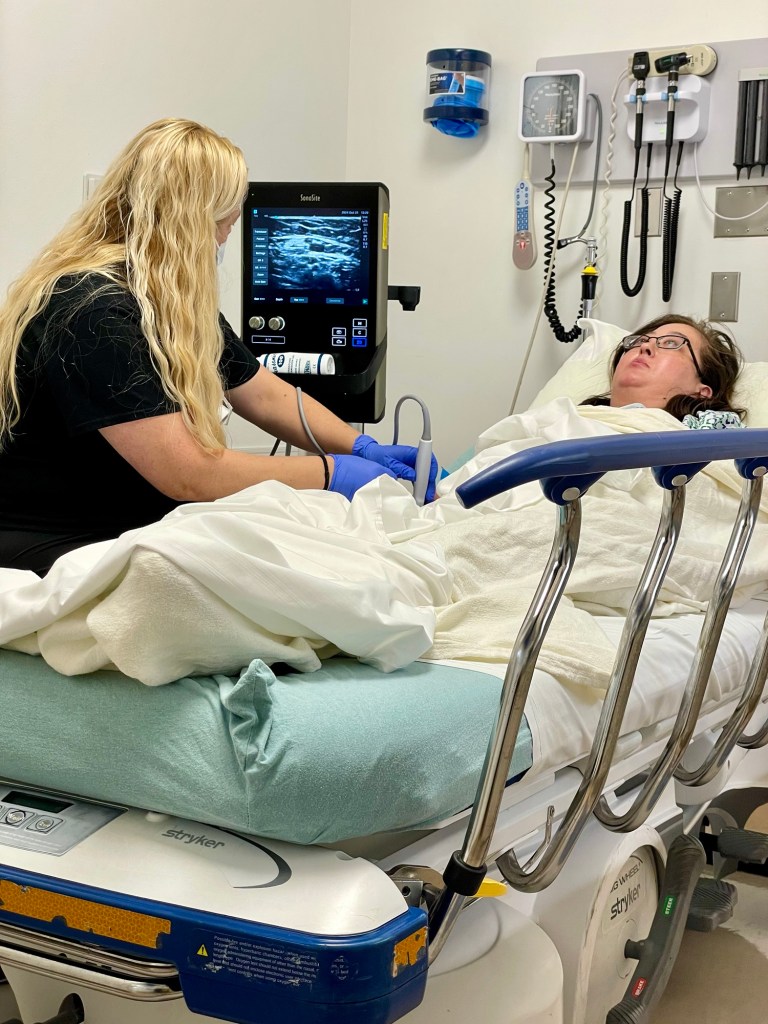
When we arrived at the anesthesiologist’s pre-op check-in today, we didn’t know if the procedure would occur. Fortunately, everything checked out, and they proceeded as scheduled.
To that point, the main event, if you will, the EGD procedure resulted in a successful dilation of the pylorus, verification that her ulcer was gone, reinsertion of the feeding core pack into her small intestine, and a final inspection of her stomach and throat for any ulcers or issues from all the vomiting—all was clear.
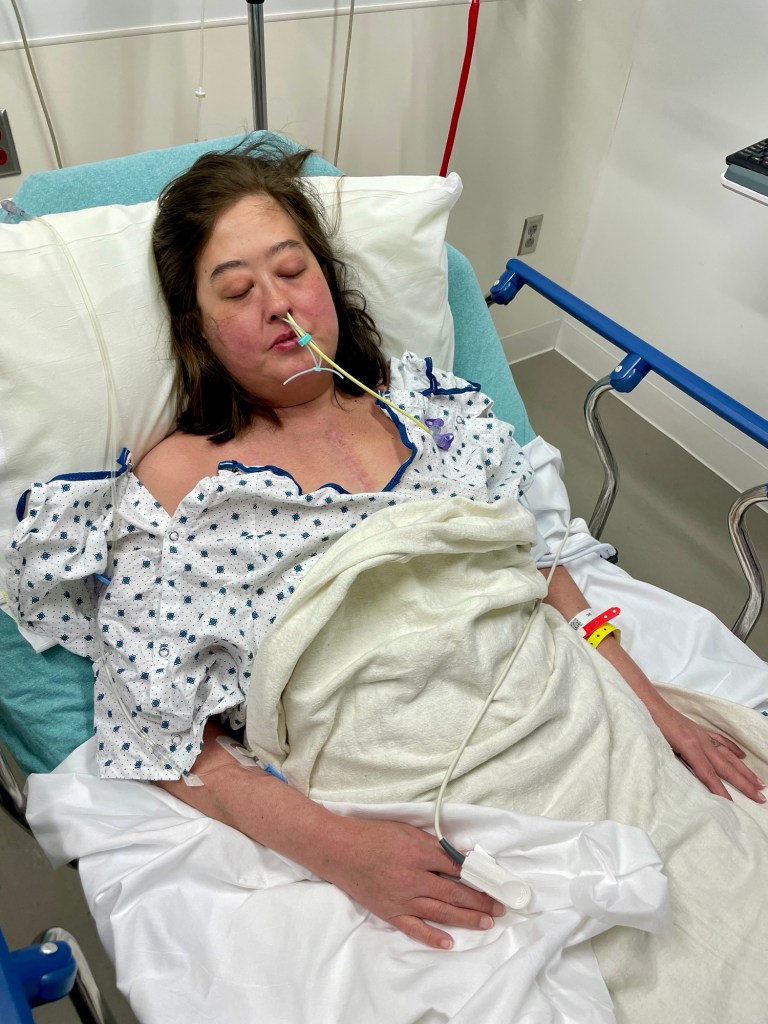
The EGD imagery of the dilation was interesting because they used a balloon to expand the pylorus (top of the small intestine) by 15 mm, forcing it open so food could quickly enter the small intestine for proper nutrition and absorption. Tasha can already feel a difference with liquids, which is a huge relief.
The plan now is to establish a high caloric intake via a feeding tube to gain weight back and start a staged approach to increasing food consistency: clear liquids, shakes and soups, puréed, soft food, and finally, everyday foods chewed well. This will take several weeks, but theoretically, the body gets stronger, and the stomach gets more active along the way.
If this doesn’t work as well or as fast as we need it to, we can perform one more stomach procedure.
So, cheers to another speedy recovery phase and gained weight and strength. Until next time, friends and family.

 Lifesavers for Latasha
Leave a comment